BROKEN DOWN ON THE A27? WHAT TO DO.
The A27 is the road we get called to most often that is not on our doorstep, and the same avoidable mistakes come up every time: people sitting in the car, people who cannot say which junction they are near, and people who ring a national line and then wait two hours for a contractor. Here is what to do instead, in the order to do it.
FIRST, GET OFF THE ROAD AND BEHIND SOMETHING SOLID.
The A27 is a fast road with very little room at the edge, and the stretch between Chichester and Brighton is one of the busiest roads in West Sussex. If the engine dies, use the momentum you have to get as far left as you can, onto a lay-by or a slip road if one is within reach, and get the hazard lights on before you touch anything else.
Then get out on the side away from the traffic, take everyone with you, and get behind the barrier or up the bank. Nobody stays in the car on the A27, however cold it is. A stationary car on a dual carriageway is the one thing on the road that other drivers are not expecting, and the people inside it are the ones at risk, not the people outside it.
If you could not get off the carriageway at all, dial 999 first. The police and National Highways will put a lane closure or a traffic officer behind you before anyone can safely load a vehicle. That is not a recovery firm being difficult, it is the rule that keeps the driver of the recovery truck alive.
THEN WORK OUT EXACTLY WHERE YOU ARE.
This is the bit that saves the most time and almost nobody does it before they ring. “On the A27 near Worthing” is a stretch of several miles with junctions on both sides and a central reservation between them, and the wrong direction adds twenty minutes to any recovery.
Look for the nearest junction sign, or the marker posts at the edge of the carriageway where there are any, which carry a number you can read out. Note which direction you are travelling, eastbound or westbound, and which carriageway you are on. If you have a smartphone, the three-word location from what3words or a dropped pin in Maps is better than any description. Have that ready before you make the call.
It also helps to know what is wrong, roughly. Did it lose power and coast, did a warning light come on first, is there smoke or a smell, did it just cut out at the lights. You do not need to diagnose it. You need to give the person on the phone enough to send the right kit.
WHO TO RING, AND WHAT TO EXPECT.
If you have breakdown cover, ring it. That is what it is for, and on a fast road the network will sometimes get a patrol to you quicker than anyone else can. If you do not have cover, or the cover you have is a recovery-to-nearest-garage policy and you want the car taken home or to your own garage instead, ring a local recovery firm directly.
The difference is in who answers. A national line will find you a contractor from a map and give you a window. A local firm like ours answers the phone from the truck, tells you what we are doing and where we are, and gives you a real arrival time. If it is too long for your situation, we say so and you ring somebody else. On the A27 in particular we are coming from West Chiltington, so a call from Worthing or Shoreham is a normal run and a call from Chichester is a longer one, and you will hear which before you decide.
Whoever you ring, give them the location you worked out, the make and model, whether the car will still roll and steer, and where you want it taken. The answer to that last question is yours, not theirs. Home, your usual garage or a dealer, and it should be delivered there rather than to whichever yard is closest for them.
WHAT ACTUALLY HAPPENS WHEN THE TRUCK ARRIVES.
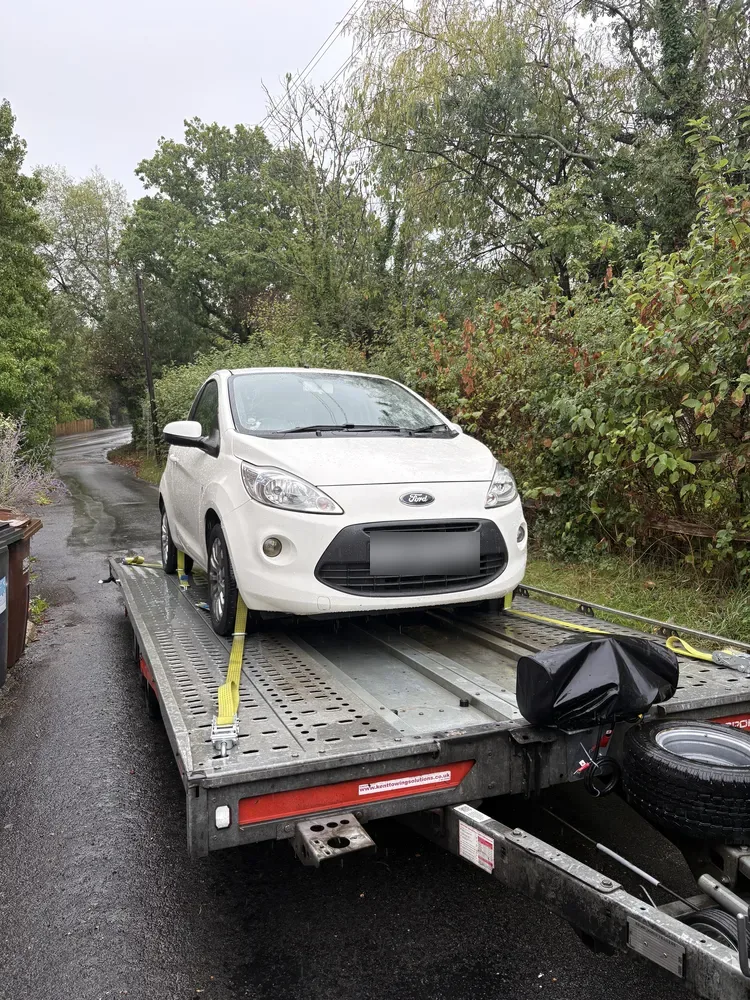
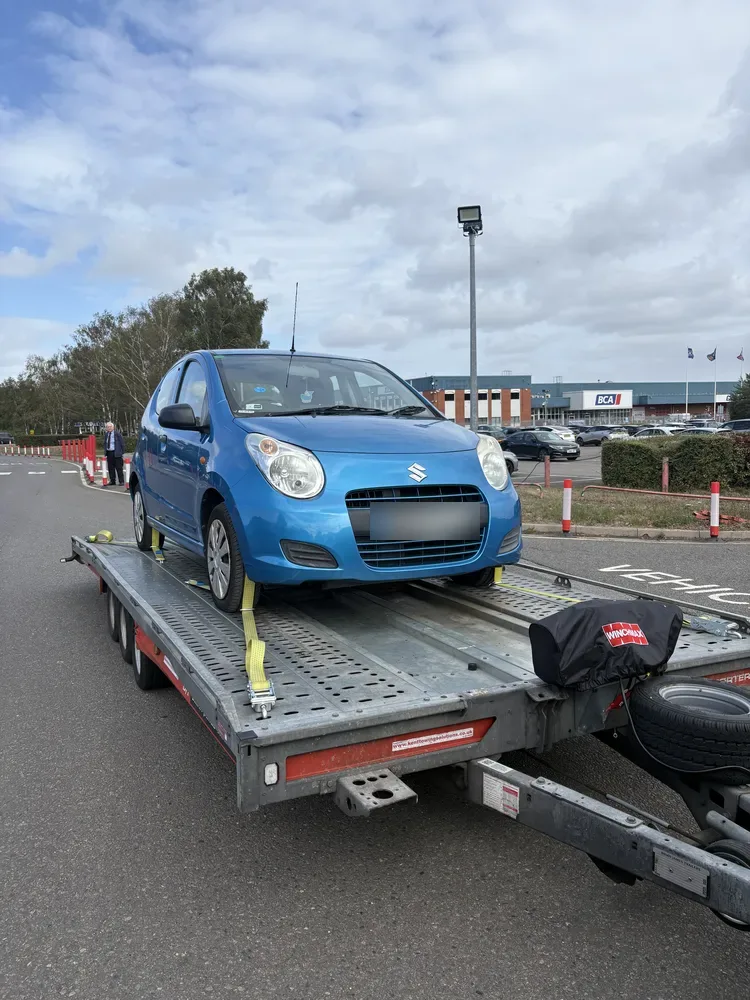
The trailer goes in front of the car, the ramps come down, and if the car will roll it is walked up on the winch line and strapped at the wheels. If it will not roll, because the brakes have locked or a wheel is jammed, it is winched on slowly with someone at the wheel where the steering still works. Low cars go up low ramps so nothing grounds. The whole thing takes about fifteen minutes on a lay-by and longer on a live carriageway, because everything is done from the side away from the traffic.
Then you get in the truck, or follow behind if you have a lift, and the car goes where you told us. Every job we do is tracked by live GPS, so if you are not travelling with it you can see where it is rather than wondering.
Two things we do not do, stated here so nobody finds out on the phone: we cannot load anything over 2.8 tonnes, and we do not take on accident work. A collision on the A27 is an insurance and police job first and a recovery job second, and you will be better looked after by a firm that handles that all day.
THE SHORT VERSION, FOR THE GLOVEBOX.
Get left, hazards on, everyone out and behind the barrier. Find the junction, the marker post or a pin. Ring your cover, or ring a local firm and get a real time rather than a window. Tell them the location, the car, whether it rolls, and where you want it taken. Then stand well back and let them load it.
If that firm is us, the number is 01403 458457 and the person who answers is the person who comes out. We cover the A27 from Chichester to Brighton as part of our vehicle recovery across West Sussex, with full pages on recovery in Worthing and every other town on areas we cover.
Quotes by phone, WhatsApp or email. No obligation.

Vehicle transport and recovery from West Sussex. Enclosed and open transport nationwide, fully insured, with live GPS tracking and photographs at collection and delivery on every move.